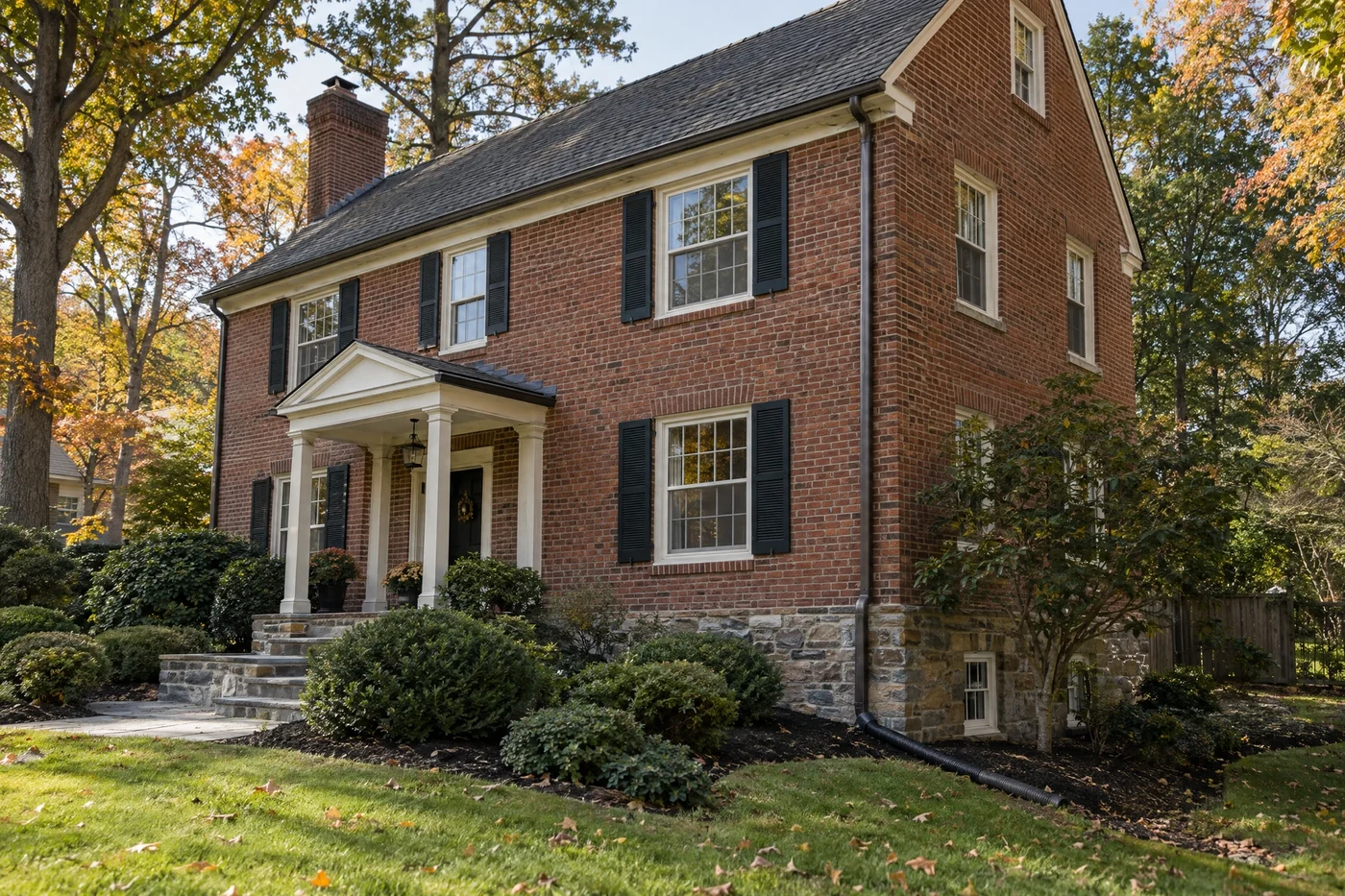
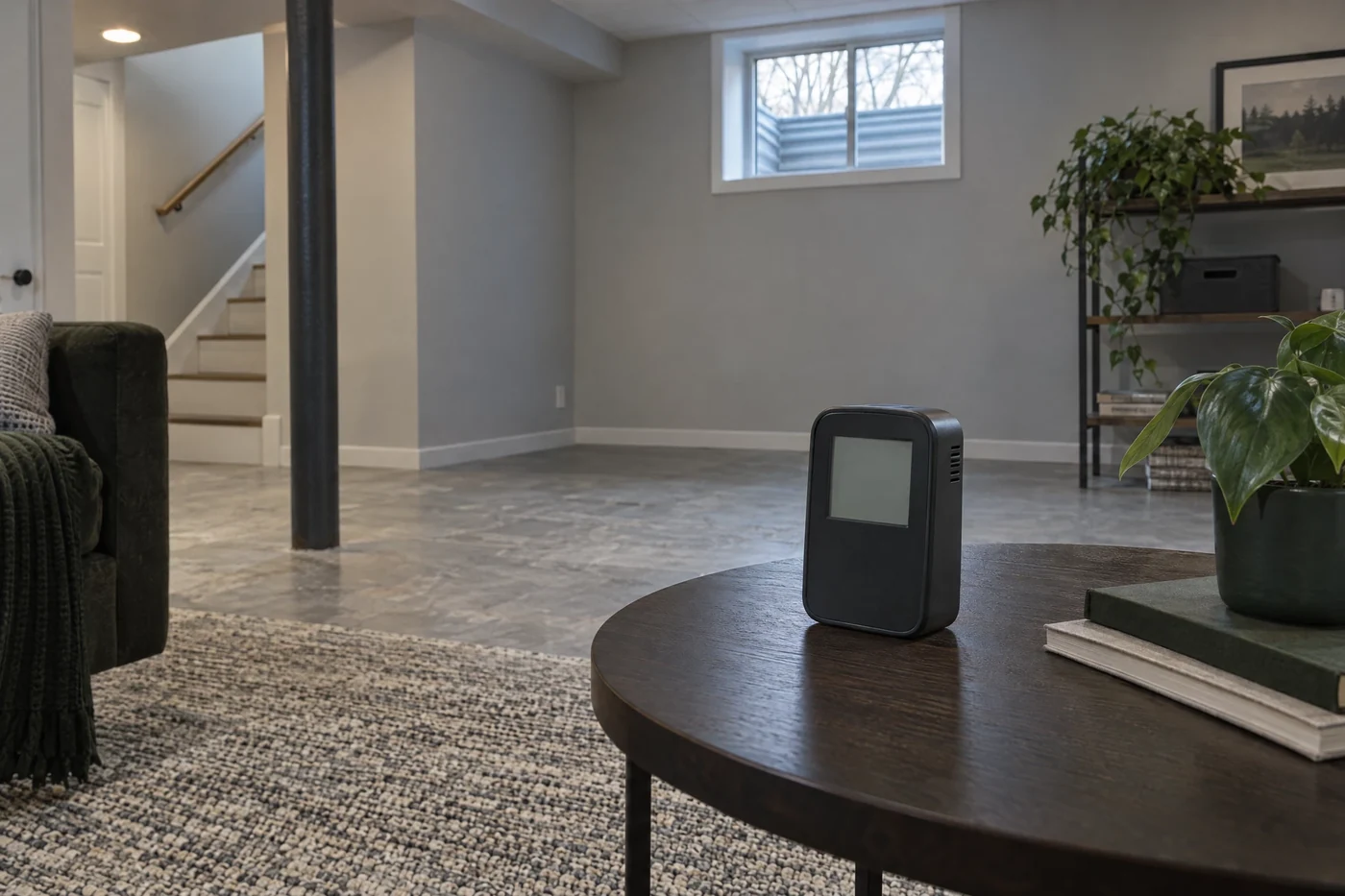
An illustrative, unbranded radon monitor sits on a small table in an empty finished basement. Subtle windows and clean mechanical details suggest a typical home interior without depicting a Camelot property or completed inspection.
Why test a Montgomery County home
Radon is an invisible radioactive gas formed as uranium in soil and rock breaks down. It can enter through foundation openings and build up indoors. A walkthrough cannot reveal the concentration; testing can.
Montgomery County is in EPA Zone 1, where predicted average radon levels are at or above EPA’s 4.0 picocuries per liter (pCi/L) action level. That is an area estimate, not a reading for a particular address. The County says every home should be tested and a single-family home must be tested before a sale is completed. Buyers can request the written result and ask when and how the test was done. [1]
Place the test where people could use the space
For a buyer-focused test, EPA recommends the lowest level that could be used regularly, finished or unfinished. A basement that could serve as a bedroom, play area, family room or workshop may matter even if it is empty today. Do not substitute a closet, hall, stairway, crawl space or utility room. [2]
A short-term test can provide a timely transaction result. EPA says a test should last at least 48 hours, though some devices require longer. For a test shorter than four days, close windows and exterior doors at least 12 hours beforehand and keep them closed during testing except for normal entry and exit. Keep the device still and away from drafts, heat, humidity and exterior walls. Occupant cooperation matters: open windows or a moved monitor can compromise the result. [2]
Read the number as guidance, not a diagnosis
EPA recommends fixing a home when the result is 4 pCi/L or higher. A lower number does not mean zero risk: EPA notes that exposure below 4 pCi/L still carries some risk and suggests considering reduction between 2 and 4 pCi/L. Levels vary over time, so a short test is less likely than a test lasting more than 90 days to represent a year-round average. [2]
If a result is near the action level, ask whether another measurement would help. EPA describes real-estate options such as two passive tests run together or a continuous monitor used for at least 48 hours. Review the device, location, dates and result on the report.
A high result calls for mitigation and a check afterward
Testing measures radon; it does not remove it. If the result warrants action, a qualified mitigation contractor can evaluate the home and recommend a system. EPA says systems commonly use a vent pipe and fan to draw soil gas from beneath the floor or foundation and discharge it outdoors. The appropriate design depends on the home, so request a written scope and ask how performance will be checked. [2]
EPA advises testing again after mitigation to confirm levels have fallen, preferably with an independent qualified tester. If a home already has a system, ask for installation or service records and the latest test report. A fan or pipe alone cannot tell you the indoor reading.
Make the result part of the buying conversation
Before a contingency or settlement deadline, confirm who arranged the test and whether it followed the stated protocol. If there is no report, conditions were uncertain or the result is elevated, ask your agent and radon professional about timing and next steps. A building inspection can note visible foundation conditions but cannot measure radon; arrange radon testing as a separate service.
See our buyer checklist for Gaithersburg homes and earlier radon testing basics guide. Neither replaces this property's report. Use its reading to frame a question for the seller or a qualified specialist, not as a neighborhood prediction.
References
[1] Montgomery County: Radon. County area designation and sale testing guidance.
[2] EPA Home Buyer’s and Seller’s Guide to Radon. Test placement, conditions, result interpretation and mitigation follow-up.