
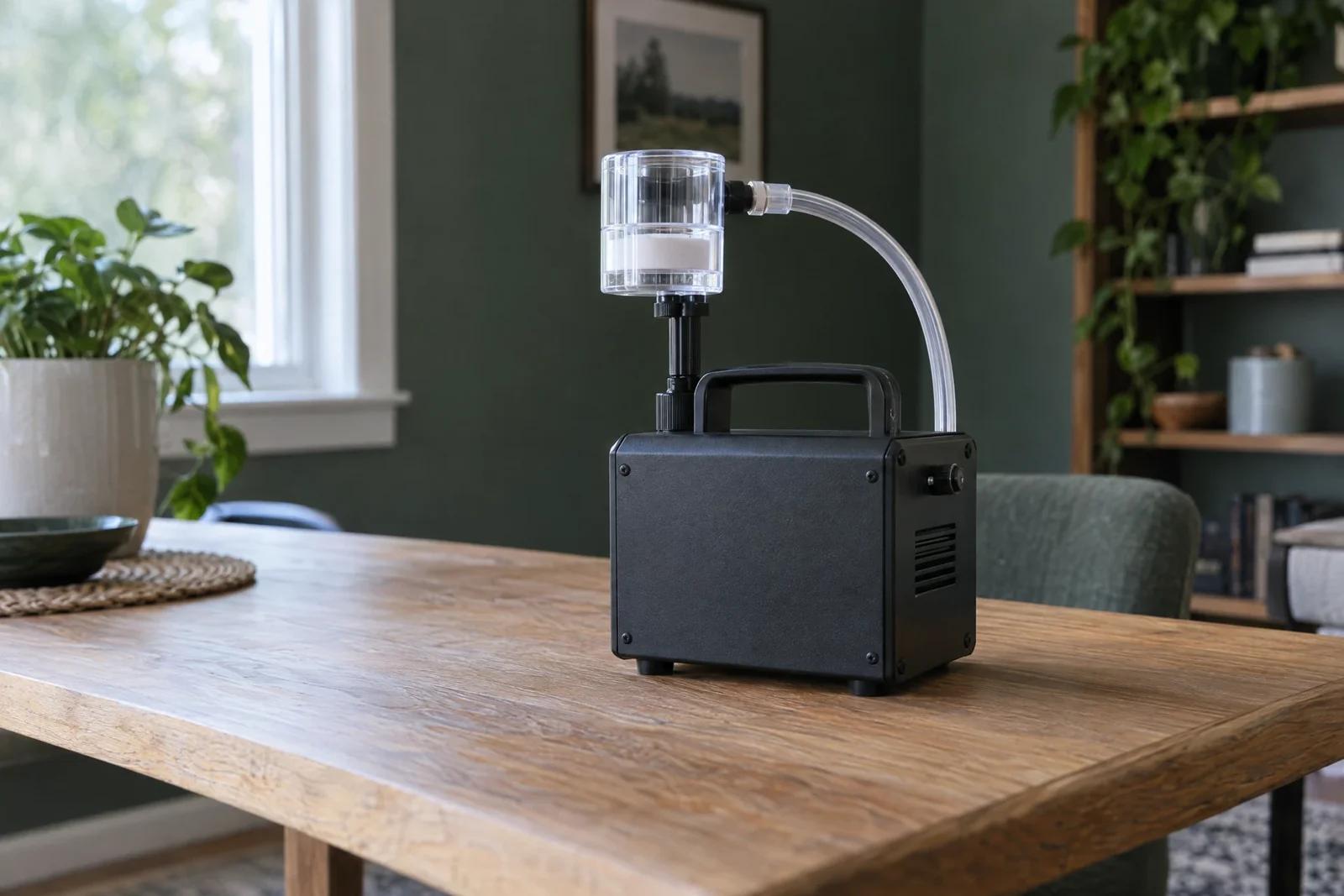
When an air sample may help
Indoor air sampling can add information when you have a specific concern about possible airborne mold spores—for example, after noticing a persistent musty smell, seeing a suspected patch of growth, or dealing with a leak or damp area. The result is a sample of conditions at a particular place and time, not a complete inventory of everything in the house.
Sampling does not identify every possible indoor air concern, establish why moisture is present, or show what may be inside a closed wall. A result cannot diagnose an illness, explain symptoms, or promise that a home is mold-free. If your concern is about a health condition, discuss it with a medical professional; Camelot provides property inspection services, not medical advice.
What the service can—and cannot—tell you
Air sampling is a non-invasive way to gather information about airborne mold spores. It can help you decide what to investigate next, but it is a snapshot rather than a permanent reading of the home. Room conditions and known leak or dampness history can help put a single sample in context.
A home inspection is visual and limited to areas that are safely accessible; it is not an opening-up investigation, warranty or code-compliance certification. Sampling by itself does not locate a leak or prove the extent of hidden growth. Infrared imaging, when separately appropriate, detects temperature differences that may point to areas for further attention; it does not see through walls or prove moisture or mold. Radon is a separate issue: it cannot be seen or smelled, and only testing can determine its level. Mold air sampling is not a radon test.
Plan the visit around the concern
When you call, explain what prompted the request and where you are concerned: a particular room, a visible area, a past plumbing or roof leak, or a recent repair. Mention whether the property is occupied or being purchased, what you already know about moisture, and any access limits. That helps Camelot discuss whether air sampling fits your question and what the service can reasonably address.
Before the appointment, arrange access to the rooms or areas you want considered. Tell the inspector about recent cleanup, repairs, unusual odors, or changes in how the space is used. Ask when scheduling whether your visit needs any specific preparation.
Get clear next steps
Camelot Home Inspections Inc. is a family-owned company founded in 2004. Bob Murphy, Certified Master Inspector (CMI), has personally completed more than 5,000 inspections across the DC, Maryland and Northern Virginia area. The aim is to give you useful property information in plain language—not to overstate what a sample can settle.
To discuss scheduling, call (855) 312-9472 or email [email protected]. Include the property’s city or ZIP code, your reason for requesting sampling, the areas of concern, any known moisture history and how best to reach you. For an overview of related inspection options, see inspection services; learn more about Camelot and Bob Murphy, or use the contact page to find contact details.