
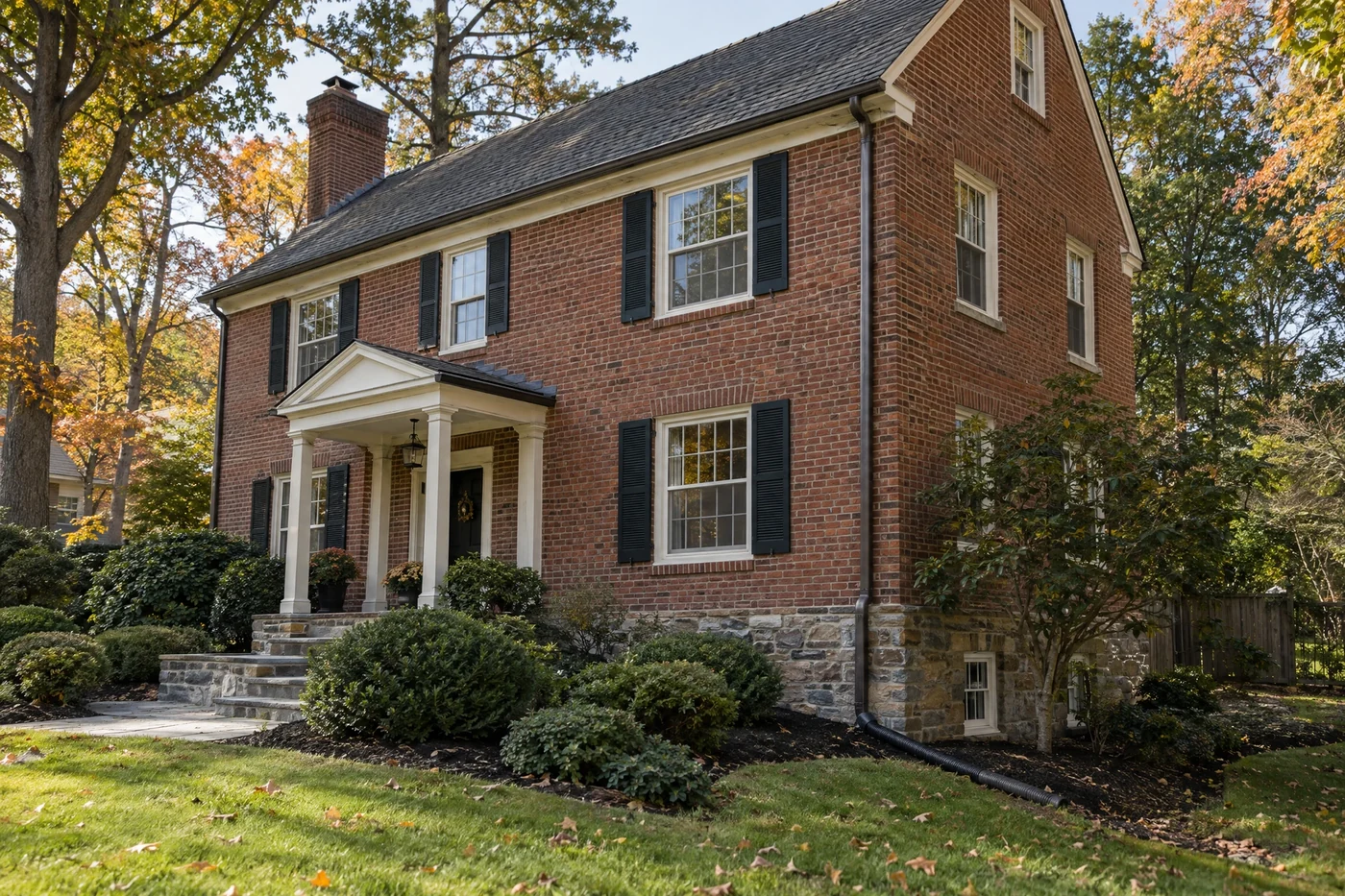
An illustrative photograph of a brick suburban Maryland home in autumn, framed to show the roofline, foundation and a downspout. It is not a Camelot inspection property or a record of an actual inspection.
In Gaithersburg, polished counters say little about drainage or system performance. Use the inspection to ask what needs attention, merits specialist review or is ordinary upkeep.
Look past finishes without guessing
A worn carpet is usually a finish decision; a ceiling stain, soft floor near a tub or window that will not latch may signal a performance issue. Ask the inspector to explain the observed condition and why it matters. A blemish alone does not establish a defect, and fresh paint does not prove a problem was repaired.
Give renovated rooms the same attention as untouched ones. Ask the seller for available receipts, permits or warranties describing recent work. A standard inspection is visual and non-invasive, not a permit-record review or workmanship guarantee. The ASHI Standard of Practice describes observations of accessible, visible components at inspection time.
Follow water from roof to foundation
Outside, look at roof edges, gutters and downspouts. Is discharge directed away from the foundation? Does soil slope toward the house, or do settled walks appear to hold water? Vegetation and stored items can hide lower walls. These clues do not prove a leak, but help focus drainage questions.
Inside, compare basement walls, floor edges and window wells. Staining, peeling paint, white deposits, rust, a musty odor or a sump pump need context: are they old, active, seasonal or tied to a repair? Ask what was visible and what could not be checked. EPA moisture guidance highlights fixing water sources, maintaining gutters and directing ground slope away from foundations.
Look beneath sinks, around toilets and near the water heater for dampness or corrosion. Operate accessible fixtures and note slow drainage or leaks. A dry surface on inspection day does not prove there was never water intrusion. If visible clues conflict with seller records, ask whether a plumber or drainage specialist should investigate before your decision deadline.
Connect structure with changes
Note sloping or bouncy floors, cracks, sticking doors, gaps at trim and windows that bind. A single crack or uneven floor is not a diagnosis; patterns across adjoining areas may warrant further evaluation. Ask where the inspector saw a concern and whether stored belongings, finished surfaces or limited access obscured the structure.
Ask what the systems could demonstrate
Ask which heating and cooling equipment could be operated and whether it responded under inspection-day conditions. Note labels and reported age if available, but age alone does not establish remaining life. Ask about unusual noises, visible leaks, damaged venting and missing maintenance records. An inspector observes operation; the inspection cannot predict future performance.
For plumbing, electrical components and built-in appliances, ask what was operated and what was inaccessible or outside scope. Note a blocked panel, weak fixture flow, damaged-looking outlet or fan that will not run. Do not remove covers or test unfamiliar equipment yourself. An unexplained safety concern may call for evaluation by an appropriate trade.
Turn findings into clear next steps
During the walkthrough, ask the inspector to explain representative findings and their significance. In the report, separate safety or water concerns from maintenance, aging components and appearance. Request locations, photographs and recommended next steps. Camelot's photo-rich, color-coded reports help clients understand observed conditions, but do not replace specialist diagnosis or seller records.
Make follow-up questions specific: ask a roofer to evaluate identified flashing, rather than simply writing “check roof.” Clarify what further access or testing is appropriate. Your inspection report informs decisions; contract deadlines and advice from your real-estate and legal professionals guide negotiations. HUD distinguishes an appraisal from a home inspection.
For a buyer-focused review, see Camelot's pre-purchase home inspection service. Ask how the scope fits the property and your timing. The useful outcome is not a pass-or-fail label, but a clearer view of observed condition, meaningful limits and questions to resolve before you commit.